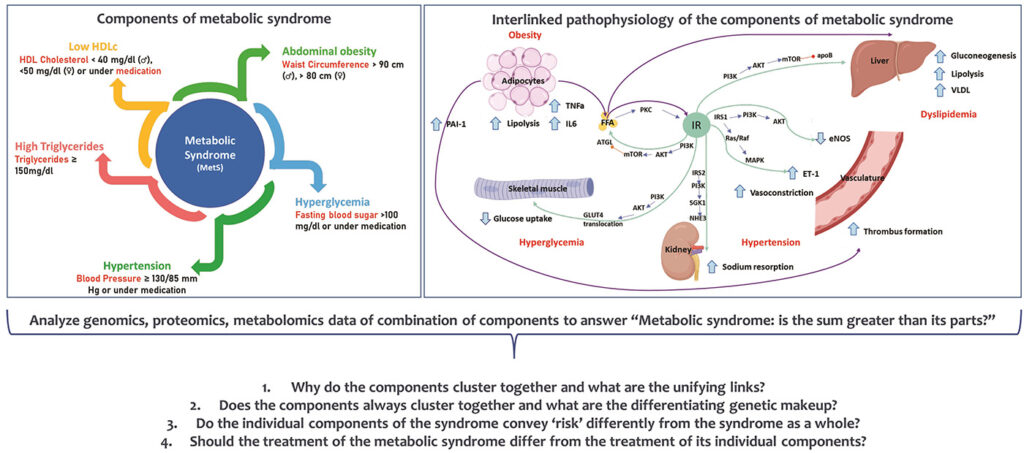
Identification of polypharmacological targets in metabolic syndrome

Metabolic syndrome (MetS) is a complex disorder characterized by a cluster of metabolic abnormalities including obesity, hyperglycemia, dyslipidemia and hypertension. Owing to the increasing prevalence of MetS and its adverse effect on quality of life, there has been a surge in research activities aimed at improving our understanding of MetS. These efforts have led to large quantum of data in the public domain that are amenable to systematic data mining. In spite of the identification of many genetic risk factors, a large proportion of heritability of the MetS components remain unidentified. We are systematically reviewing the information available on public domain and curating the content for further analysis using system biology and data mining algorithms.
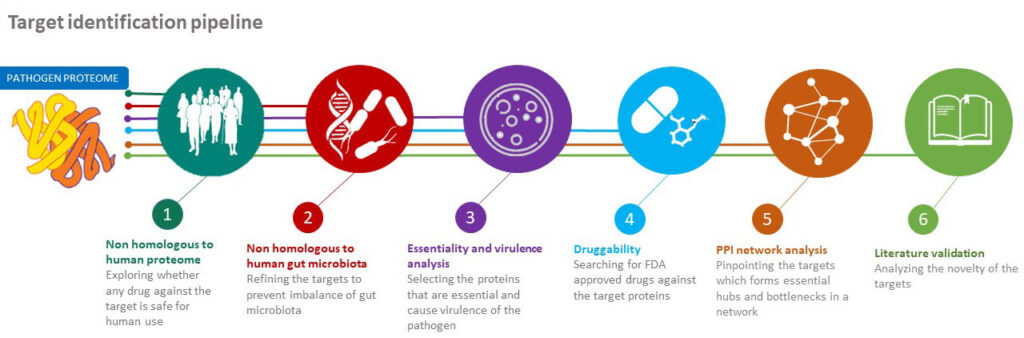
Identification of novel drug targets for infections caused by Candida spp.

Majority of the fungal mucosal infections observed in healthy and immunosuppressed individuals are caused by Candida spp. These infections manifest in the form of oral thrush, vulvo-vaginal candidiasis and candida blood stream infections. Candidiasis is mostly treated using broad spectrum antifungal agents. This has led to emergence of a population of drug resistant/nonresponsive strains of Candida. This challenge can be adressed by the development of novel drug targets. We have developed an online tool called Pipeline Builder for Identification of Targets (PBIT) for users to screen proteomes of pathogens for identification of drug targets. The proteomes of Candida spp. are currently being studied through various methods that include subtractive genomics, network biology, systems biology and flux-balance analysis for discovery of novel targets and drugs. The predicted targets and drugs are being validated through broth microdilution assay and gene knockout strategies.

Gene-disease association and comorbidity studies on lean and obese PCOS

Polycystic ovary syndrome (PCOS) is a complex endocrine disorder and a leading cause for female subfertility. Individuals with PCOS also suffer from several comorbidities. We have developed a knowledgebase on PCOS (PCOSKB) that contains information on genes, mutations/SNPs, associated diseases and pathways. Through a meta-analysis of gene expression profiles of PCOS women, we have tried to identify the differentially regulated pathways and risk of comorbidities in lean and obese PCOS. We are in the process of validating these findings using rat as animal model.

Design and experimental validation of Follicle Stimulating Hormone Receptor modulators

Follicle Stimulating Hormone (FSH) plays crucial role in maintaining reproductive health of an organism by interacting with its cognate receptor (FSHR). Hence, molecules that can block or mimic this interaction by specifically binding to FSHR can serve as fertility modulators. Several such molecules (peptides, peptidomimetics and small molecules) have been identified using various in silico tools. These molecules are being experimentally validated to establish the potential of these molecules as fertility regulating agents as well as theranostic agents.

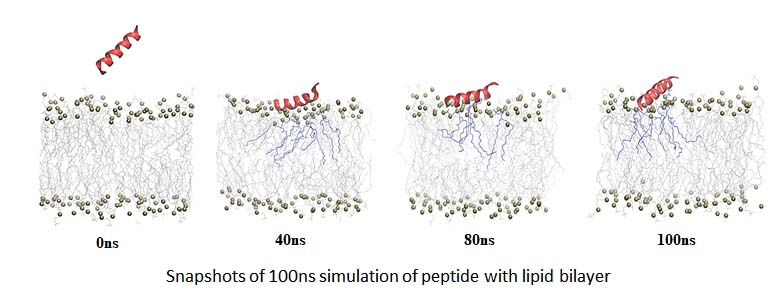
Studies on antimicrobial peptides

Antimicrobial peptides (AMPs) are evolutionarily conserved integral components of the host defense system. They are widely studied for their potential therapeutic applications as they exhibit broad spectrum antimicrobial activity, reduced toxicity and reduced microbial resistance. The centre focusses on developing databases on AMPs (CAMPR3: http://camp.bicnirrh.res.in/), creation of tools for predicting the antimicrobial activity of user-defined sequences, identification of AMPs based on presence of family-specific sequence conservation (CAMPSign: http://www.campsign.bicnirrh.res.in/) and studying the sequence-function relationship of AMPs using MD simulation studies.